The article was one of many paeans to Portland peppering the national press lately. The breathless pace and gushy tone spurred me to write a parody of bad travel writing. I tried to follow a few simple rules:
• If one adjective helps, two or three are even better.
• Stereotypes and generalizations are always a good choice.
• When in doubt, grasp onto a cliché as if your life depends on it.
• Keep your thesaurus handy...ermm…accessibly situated.
My parody kept getting longer and longer, until it was so ridiculously long (for a blog post) that I lost track of where I was going or how to bring it to a merciful end. I toyed with cutting or serializing it. Then I decided to just publish it. Now it’s in your hands. Savor.
East Chesterburg:
An Old-World City Perched on Tomorrow’s Rim
This resplendent metropolis gets just about everything right: From the friendly natives to the homebrewed deliciousness that embraces every visitor.
 Here in the self-proclaimed “City that Can,” restaurants pride themselves in serving locally-prepared meals, and every barkeep is quick with a jovial anecdote that will, one day, become a part of your own tribal lore. Local crafts and an innovative commitment to “green” living are worn like a comfortable flannel suit in autumn, and are as reassuring as a bowl of warm applesauce. What’s more, this is a city that does not hesitate to flaunt its funky charms, just as its residents feel no qualms in sporting billed caps, no matter the weather. Add a flair for the ubiquitous and verdant, and you’ve got a vacation-in-the-making for all but the most hard-hearted of hard-core adventurers.
 East Chesterburg isn’t the first place you’ll compare to Paris, but it’s not likely to be the last either--and that says a lot. It’s among a handful of American towns that has managed to pair civic engagement with a soupcon of down-home bonhomie that will have you saying both “oui!” and “whee!” From its trendy downtown nightlife scene to the downscale bohemian haunts that typify the North Gulch Arts District, this is a town that welcomes everyone with the warmth of a Golden Retriever’s tongue.
Starting on the Right Foot
We launch our East Chesterburg adventure with a hearty breakfast at Tiny Harpo’s—a charming diner occupying a prime spot in the heart of the town’s bustling business arrondissement. Before entering this petite boîte, be sure to pause for a moment to listen to the autoharp player on the corner. Sing along if you must. You’ll be delighted to leave a small tip in his open case.
As we wipe the steam from our glasses, we’re greeted by a proprietor who can only be described as brobdingnagian. Nobody personifies the character of an East Chesterburgian restaurateur better than the bistro’s namesake. With his trademark, “Halloo!,” and belying his 400-pound girth, he sweeps us dexterously to a cozy booth by the window, then deals a handful of menus with the speed of a Las Vegas blackjack dealer jacked up on diet pills. In short order, our winsome server fills our water glasses and makes sure we all have napkins. Keeping her promise to return with hot coffee, she takes our orders with a vivacious professionalism that feels as comfortable as a pair of broken-in huaraches. I choose the “Tiny’s Special” – an adventuresome mélange of scrambled eggs and la saucisse de Francfort topped with a tangy hollandaise sauce. You will be well served by selecting the same, or perhaps you’ll opt for a simpler fare from a bygone era. On any given morning, many of Tiny’s patrons can be witnessed enjoying a light repast of toasted bread squares while perched on angular chairs, perfectly resplendent in parti-colored smocks, knit leggings and the customary cap tilted rakishly.
With a satisfied belch and a neighborly handshake, we emerge from Tiny’s into the rays of a sun that radiates its beams on East Chesterburg many days of the year. When you visit, you’ll want to chat with Tiffany and Amber, animated purveyors of Girl Scout Cookies outside of the Thrift & Save just around the corner. I choose a box of Thin Mints, but you would not be wrong to pick otherwise. Don’t forget to pet the puppies for sale in the box over by the shopping carts.
A Place of the Present with a Forward-Thinking History
East Chesterburg is all about sustainable, low-impact living. As a matter of both public policy and personal ethos, visitors and residents adopt organic, people-powered modes of transportation, including walking and bicycling. People here stride with a confident bounce as if effervescently buoyed, stepping with the crisp snap of a sugar pea from one of the farmer’s markets that thrive, year-round, on every vacant lot. They ride their handcrafted two-wheelers attuned to a personal soundtrack best described as a gumbo of free jazz and proto-bluegrass. Don’t be surprised to see pedallers cruising the neighborhood lanes three abreast, each snapping thumb and finger in a syncopated rhythm that brings to mind a fringed surrey frozen in time by the flash of a daguerreotype camera wielded by Matthew Brady himself.
My first post-repast stop of the day is the East Chesterburg Municipal Museum, housed in a former civic building marked with a postmodern slash of architectural frippery. Entering the museum is like stepping back in time while looking into the future through a kaleidoscope of wonder. Time your visit just right and you’ll miss the rainstorm that will pass through town just a few hours before the city rolls up its sleeves for lunch.
Lovingly curated, this museum is chockablock with refreshing artifacts that reveal more about each visitor’s character than that of those who crafted them. You’ll want to linger at each exhibit to revel in the intrinsic knowledge and inspiring message it imparts. The old-world docent dozing in the corner is Mort, and he’s been manning his station for longer than anyone cares to remember. If Mort tells you to not touch something, it’s a memory you’ll cherish for the rest of your visit. A stop at the gift shop will leave your pockets full of postcards and informative brochures. Edna, the gift shop clerk, will give you $1.55 in change and a whimsical smile that says more than you think.
Stridently Moving Forward
East Chesterburg is so thoroughly trendy these days that at times it seems past retro and outside of outré. An uncounted number of people here live in town or in the suburbs, often in houses or apartments, many with driveways and garages. No taller than most people, East Chesterburgians are not often described as diminutive, though they might be if viewed from the proper distance. A formation of Canada Geese migrating overhead might be fooled into believing that the town itself is smaller than many cities, yet it is larger than others—something not every city can claim. One could live here for a hundred years and not meet every resident at least once, though you will feel as if you have, and you will.
Already hungry for lunch, I follow the recommendation of long-time resident, Herb Vouchsafe, and borrow a red bicycle which I ride to the outskirts of town to visit a rural eatery universally beloved by local omnivores. My handlebars glint in the sunshine, eliciting appreciative waves from townsfolk picking fretless banjos and crocheting socks on rickety front stoops. A quick tinkle of the bell engenders peals of laughter from the youngsters jumping rope in each schoolyard I pass.
As often happens in this city, I find the place to which I was headed exactly where it should be. Mo’s Pig House is redolent of grease and the briny elixir of a seaside fishing shack, reminding me of the winter I hitchhiked from Amsterdam to Antwerp on a foggy morning, laden with a sodden backpack, a perplexing itch and a head full of Baudelaire. You will feel exactly the same as you peruse the written synopsis of food items and pricing that serves as a menu at Mo’s. I choose a beer-battered cheeseburger with a side of crispy sweet potato fries and tart kimchee, but you may want to try the “Pig House Sampler” – a veritable pupu platter of pork pies. The water at Mo’s is free, but a word of warning: You’ll have to remember to ask.
The rain is just returning as I finish my dainty banquet and settle the bill. Swaddled in a bee-yellow poncho, I mount my two-wheeled steed and steer northeasterly to East Chesterburg’s charmingly-named “Labor Town” – a gentrified neighborhood once home to the city’s blue collar community, now a burgeoning village where artists, musicians and writers bump elbows and trade coffee-roasting tips with retired pipefitters.
Before arriving in the district, I veer to the right for a quick visit to a local used bookstore, The Wormy Book, to meet up with the city’s leading naysayer-cum-raconteur. “I realized East Chesterburg was going to be my home within 20 minutes of first arriving at the bus depot.” says Bud Skullnick, the bookstore’s Sales Team Guide. (“We don’t use hierarchical titles here,” he explains). “It had something going on that is indescribable. I guess I couldn’t imagine myself going anywhere else,” he explains while scratching the long white beard of his personal attendant, an elderly man of Asian descent. “Moreover,” he continues, fiddling a straw boater that I soon learn is his signature look, “I decided that if I was going to live here until I die, I was determined to spend every single day agitating for something to happen.” After only one day in town, I understand the sentiment, though I would be hard-pressed to explain it.
I'm introduced to another form of East Chesterburg’s agitation when I visit Stuff Mart, a cavernous repository of purposeful materials of every imaginable description. The exterior of this emporium will delight you with its medley of whimsical objects crafted from other objects, but inside it's a $5-million-a-year business overseen by a wizened man who can only be described as avuncular. Put this shop on your bucket list because it’s a sight no visitor should miss, both for its astounding variety and because it embodies the “East Chesterburg Way.”
"We move eight tons of product a day,” reports owner, William Sherwin, burning with conviction in a vintage Motorhead T-shirt and paint-splattered carpenter pants with worn knees. "The idea is to take what some people don’t want and turn it around to sell to people who want it. If we do it right, everybody’s happy. It’s the East Chesterburg Way.”
His goal, he says, "is to create a business model that can be given away to other places." One outcome is that Stuff Mart has become a popular stopover and photo opportunity for visiting dignitaries who hope to emulate East Chesterburg’s economic success, the 16% unemployment rate and junk bond rating notwithstanding. Some weeks, Mayor Sam “Slappy” Simperson is here so often you may find him catching a little shut-eye between official visits by curling up in a quiet vestibule on the premises. When you visit, he’s sure to tell you, “People all over the world want to see this. We let them watch and learn.” He will then tweet a message to his 1,480 followers: “Just told a visitor the East Chesterburg story. Awesome!”
On the Fringe
Local business boosters have been doing their best to promote East Chesterburg with a campaign that defines the town as “The New Edgy.” Gurf Franklin, creative director of a internationally renowned ad agency, Spank Spank (formerly InterModalMedia LLC), gives me a synopsis of the multimedia presentation that sold the city leaders on the campaign. “My partner, Jambo Fripp, came up with the concept of edge-seeking,” explained Franklin as a raincloud scuttered past the multi-paned windows of the former rope factory that is the firm’s creative cauldron, known affectionately by locals as “The Old Rope Factory”. Over the course of the next two-and-a-half hours, he hammers home the concept that “humankind instinctively and continuously seeks the edge … the boundary…the outer limits… the border… the outside of the envelope… terra incognito … did I mention the border?” He grasps a saltine and snaps it in half to illustrate a point that leaves me, oddly, more curious than indifferent.
The hallmark of this boosterism is the annual East Chesterburg Alternative Fringe Festival for Transgressive and Movement/Audio-Based Arts (popularly dubbed “the Alt-Trans-Fest”), which hosts 4,287 events over 13 days, ranging from macramé workshops to community pig roasts and pet swaps. Contemporary dance companies compete with dressage enthusiasts for top honors in the “So You Think You Can Prance” extravaganza at the Veterans Exposition Hall and Natatorium, while close to 2,000 local indie bands plug in at virtually every bar, diner, bowling alley, rooftop, subterranean grotto, Masonic Lodge and tented parking lot within a fourteen mile radius of downtown East Chesterburg. You’ll be hard pressed to find a single local under the age of 40 who doesn’t clamber for the coveted all-access wristband for the Alt-Trans-Fest. These “young moderns”--a common reference to members of East Chesterburg’s flamboyant youth culture--enjoy nothing more than loud music, alternative transportation, social media, distilled or fermented beverages, and tam o’shanters. When they’re not blogging and tweeting about their experiences, they open themselves to experiential learning like breaded abalone simmering in a sizzling fry pan of garlic butter.
Red-bearded, energetic, and wearing shoes that squeak when he walks, the director of an emerging social media aggregator, Parlay Jones, likes to call young East Chesterburgians “the next generation of generational change agents.” Himself an owner of 14 recumbent bicycles (one of which is a functional whiskey still), Jones loves nothing more than donning a distinctive hat and joining his youthful compatriots at any one of the hundreds of ubiquitous rolling food carts that crop up at every intersection in East Chesterburg, waiting to serve dripping slabs of deep-fried cuisine to a hungry workforce of cultural creatives.
"The food carts are all about choice,” Jones likes to say. “Every single generation but my own had no choice over what they ate—or even when they ate. Now we like to mix things up and live in the freedom of the moment, eating on the sidewalk because we can, even in the rain. It’s what puts us on the cutting edge of the food empowerment movement. Honestly, it’s what makes us better than every other city in the world. That, and our tam o-shanters.” Sitting on the curb eating fried potatoes topped with chorizo-hummus and siracha sauce is a rite of passage for every young person in town, and you’ll not want to not be one of them.
Adventures in Wayfinding
To navigate East Chesterburg, whether by bike or otherwise, you’ll have to master some basic geography. First, imagine the Toohoioliatte River (pronounce it “TOO-late” unless you want to be laughed at) smartly cleaving the city, east to west, with the north sector (home of the city's downtown) on one side, and the south (home of the city’s tree-lined neighborhoods) on the other. In the northwest quadrant, you’ll find the upscale Upland Heights and the trendy and fashionable Nebbish Hill neighborhoods. The southeast is divided by Clifford’s Gulch into the gritty Lower Southeast and plucky Upper Southeast boroughs. The northeast itself is divided by Sully Swale, which cuts diagonally from southeast to northwest, and is further divided by Little Creek running northeast to southwest, and Littler Creek meandering in such as way to strategically disrupt the entire street grid throughout what locals call “The Lost District.” Curiously, while Little Creek is descriptively named, Littler Creek is named after an early settler, Jacob Littler, and is, in fact, quite wide.
The north-west dividing line, which extends to both sides of the river, is the verdant Boulevard Park, a 700-acre urban retreat that stretches for 15 miles and widens to no more than 25 feet. Paralleled by Park Boulevard, Boulevard Park is a narrow expanse of East Chesterburg’s wildest, most deeply green aspects. Built single-handedly in 1895 by Charles Percy McFitts, an amateur landscape designer with spare time and a 25-foot-wide horse-drawn scraper, Boulevard Park originally served as le grande allée leading to an outer greenbelt that straddles one of the region’s many bifurcated divisions. Nearly doomed to death by bulldozer to accommodate what city planners hailed as “The Freeway to the Future,” Boulevard Park has been placed on the local registry as a “Regional Place of Significance and Meaning.”
Thanks to former mayor Burt Patsy’s acclaimed anti-encroachment campaign, East Chesterburg is now widely recognized as a breeding ground for innovative creativity in the green sector. It was Mayor Patsy who challenged all citizens of East Chesterburg to limit their propensity to expand, saying opaquely, “You have to crawl before you sprawl,” often adding his signature salute as he peddled away on a customized unicycle.
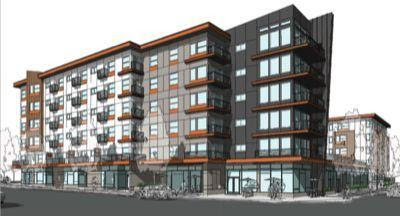
Nowadays, in new East Chesterburg developments, shops are built at street level to provide ease of pedestrian access, while charming lofts harken back to an era falling squarely between the industrial revolution and post-modern Scandinavia. Simply put, East Chesterburg’s social fabric is woven integrally with the warp and woof of a modern Valhalla perched on the precipice of a new tomorrow. There is simply no other way to describe it.
Of all the city's uber-green spaces, your favorite will be the East Chesterburg Sunken Gardens, found on the edge of the Northeast Outskirts district. The Sunken Garden provides a transformative descent into the intricacies of the spiritual landscape. "What makes a good sunken garden is the sense of sinkage it provides,” says Roxy Delacorte, the garden's Curator of Culture, Art and User Interfaces.
Delacorte and I walk, step-by-step, from the Squat Garden—one of five blending seamlessly, this one populated by colorful koi finning under the Moon Bridge—to the Splay Garden, a wondrously realistic simulacrum mimicking a representation of the hanging gardens of Pompeii as envisioned by an untrained and marginally sane artist. The gardens are known to engender quiet contemplation and repose in everyone who pauses to look. Quite literally, you will want to lie down on one of the graveled paths and take a short nap. The East Chesterburg Sunken Garden manages to accommodate hundreds of thousands of visitors a year without losing its air of solitude amidst the jostling of elbows and vigorous snapping from the Snapping Turtle Eco-Pond.
A World of Art and Culture
Becoming tiresome, I trade the tranquil Garden for the bustling streets of "The Gulch," epicenter of East Chesterburg’s thriving arts scene. This former mill district is now peppered with outlets of urban gastronomy and cultural brio, brimming with fine restaurants, jazz joints, cafés, and upscale handcraft knit boutiques. East Chesterburg’s legendary jelly and jam purveyor, Progesteron, occupies an entire city block at the vortex of the district—so large that a local ordinance mandates that each customer be issued a portable rescue beacon to be activated if lost. (You’ll want to devote an entire weekend to the world-famous Marmalade Room, but don’t miss the easily-overlooked Jellied-Seafood Annex).
On the second Wednesday of alternating months, a crush of art lovers moves at a measured pace from gallery to gallery, stopping only to pause at each waystation to absorb the ambiance and eat unpasteurized cheese. Wear black, or risk standing out as a tourist. Cross Street is noted for its edgy, post-modern electronica such as the interactive art exhibited at NERVE: A GALLERY! Press the blue button on artist Lurv Speckle’s anthropomorphic sculpture, "Deity", and prepare to be surprised to hear a loud “squonk” while being squirted in the eye with what you will hope is lemon juice. The local arts college attracts the most creative of creatives, and the streets and alleyways are rife with crafts of all sorts, from cast bronze gamelan gongs to spatulas made from repurposed motorcycle fenders. Don’t miss the display of papier mache sculptures filled with sugar-laden sweets that art-lovers attempt to burst open with decorated batons while giggling like schoolchildren at a Mexican hat dance.
My local tour guide, Webb Masterson, informs me that “the creative arts in the region explicate and inform people about specific landscapes and their transformation onto a higher plane of communal consideration." He goes on to say, “When East Chesterburg’s bootstrap industry collapsed, the community had a hard time picking itself up. In the end, it was the arts that did the picking up. It was the arts that made all the difference, not the tax on cigarettes, beer and paper napkins, though some disagree.” You’ll want to disagree, but remember: You’re just passing through.
Many of the gawkers on the Second Wednesday Art Promenade live in expensive lofts overlooking Corner Square, a comely plaza featuring a wading pool that ebbs in tidal reflux, but others come from highly individualistic neighborhoods in other sectors of the city connected to the center by a web of transportation options. Streamlined Bauhaus-inspired trolleys trundle over parallel steel rails in a mode of travel harkening to Jules Verne’s steam-age, while bus service delivers throngs of fun-seekers both willy and nilly. After your visit, you will remember being part of this “scene” for the rest of your life, and will look forward to the day when you can tell your great-grandchildren about it.
A Burgeoning Cultural Ecosystem at Work
Later that evening, I arrive at the northern edge of an unnamed neighborhood to take an upholstered seat in East Chesterburg’s newly renovated Barnhouse Theatre for a smidgeon of entertainment and culture. While named for local philanthropist, Philo T. Barnhouse, I am surprised to learn that the venue is, in fact, a former goat barn. You’ll be surprised to learn that too, after picking up a brochure that was handcrafted from a mid-century mimeograph press.
As the house lights dims, we hear a sharp intake of breath from the audience, signaling the start of a rousing rendition of the company’s long-running, runaway hit, “Hungry, Hungry, Housewives” –an unbridled musical homage to an era of laissez-faire sexual mores. When we stumble out, eyes a-glaze, we are drenched with sweat and chocolate sauce, satiated by the show’s innovative amalgam of ribald shtick and aerial ballet, accompanied by an 18-member cello orchestra and a lone flugelhorn, artfully blown. The audience at every show is fashionably eclectic—spiffy grunge to quasi-professorial—but mostly warmly predisposed to intimidation. At intermission, the crowd makes a beeline for the state-of-the-art soda dispenser for a frothy serving of a cucumber-raspberry infused vodka and cane-sugar daquirito. Like me, you’ll be glad you asked for artisan-harvested sea salt on the rim of your glass.
While enjoying the respite of intermission, we are captivated by a series of interactive monitors telling the history of East Chesterburg’s cultural renaissance. Jim Beevey, the theater's Manager of Community Engulfment notes, “We’re the only venue in town with a fully-functional wifi uplink to a cutting edge server that integrates each audience member’s feed to their personally-tailored, multi-layered choice of social media mode. It’s what the next generation of audience members crave, driven as they are to co-curate a communal cultural experience.” Beevey, a multitalented chap with a striped t-shirt peeking out from his unbuttoned charcoal jumpsuit, also produces the popular “East Chesterburg Happy Hour and Gallery Guide,” and plays jazz glockenspiel with a combo of like-minded devotees. Be sure to accept his invitation to an early morning of skeet shooting.
After the play, we retreat to a beguiling bistro in a narrow zone straddling two of East Chesterburg’s more piquant neighborhoods, Greek Town and Turk City. The Thanatos Café is famed for it’s aioli-smothered soutzoukakia, crisp flash-fried hakanakaloxia, fire-roasted phipholococcyxolitis, and blackened-xxyzysosakakia in red sauce. (The latter surprised me with its subtle blush of disomos, reminding me of the keftedes found on the island of Skiathos). After serving our food with a flamboyant flourish, our waiter leaps onto the table wielding an earthen, Mycaean stirrup jar from which issues a stream of ouzo to be caught directly in our open mouths. We laugh with abandon, then smash our soiled plates while shouting “Opa!” The savvy traveler will note that Dmitros does not work on Tuesdays.
An Animated Night of Repose
After a day bursting with urban-exploration and personal discovery, I am grateful to stumble to my lodging at the trendy DeLouche Hotel and Swim Club. The desk clerk stops the dance music long enough to offer me a complimentary nightcap of codeine-infused, boutique-distilled gin. I’m also given a choice of either a cruller filled with foamed bacon-grease (topped with shaved-beeswax curls), or a dollop of aerated whiskey-whip cream squirted from a vintage seltzer bottle onto a pewter teething spoon. I opt for the latter, but you may choose differently. The party in the lobby this evening is a gathering of East Chesterburg’s boho-riche supraclass, and won’t end until the bruise of dawn stretches across the surrounding plains like milk spilled on a granite countertop. Like me, you’ll be too tempted to join in the festivities, but you’ll resist.
Finally ensconced in my cozy room, I curl up under a yak skin throw rug emblazoned with custom-beaded Walt Whitman quotes, choose a magazine from a stack of vintage erotica stocked in each room, and watch the Sonny Liston/Cassius Clay fight playing in a continuous loop on a mid-century black-and-white television with no off button. I sleep like a baby, reminded only periodically that the DeLouche is built above the central distribution hub of East Chesterburg’s main post office, right next door to the All-Night Metalsmithing Collective and the Acme Bakery Supply Company. An old-school vending machine in the lobby offers noise-cancelling headphones for rent.
Sad Farewells and Fond Memories
Next day, I arise early and soon have my hands wrapped around a steaming mug of craft-roasted, artisan-brewed coffee at Caffe Assange, the dawn watering hole for East Chesterburg’s burgeoning community of life-style oriented creatives. We’re seated at a communal table sharing a bowl of deep-fried challah balls dusted with confectioner's sugar and porchetta crumbles (the café’s signature petite appétit dejeuner du jour), engaged in a lively debate about vegan cheeses, when founder and gastro-preneur Garth Feybart, announces that the café will be closing at noon—not just for the day, but forever. We gnash our teeth and trade email addresses with our fellow diners, vowing to meet again in other cities. When you visit East Chesterburg, you will be disappointed to find that Caffe Assange has already been replaced with something not quite as cool.
Too soon it is time for my visit to everybody’s new favorite city to come to a close. My cabbie, Herb “Toots” Thimpkin, bleets his horn to signal that I must take my bow. While all the world may be a stage, it is time for the curtain to fall on this play, and it does so with little drama. I’m not ashamed to report that I feel a tug of emotion as I say goodbye to the City that Rarely Dozes. As he drops me at the train station, Toots sums up my experience in a quietly reflective manner: "East Chesterburg revolves around things in ways we don’t understand. We throw our doors open and hope for the best. At heart, we’re just local people trying to be responsible and caring. You might want to bend at the knees when you lift that bag.”
NEXT STOP: West Chesterburg
Editor's Notes:
1) East Chesterburg is not a real town, nor is it meant to stand in for Portland, Oregon.
2) Astute readers and transcontinental pilots will note that the photograph at the top of this post is actually Lincoln, Nebraska.
3) The line about "colorful koi finning under the Moon Bridge," is directly plagiarized from the National Geographic article, where it was used in a description of Portland's Lan Su Garden. We apologize.
4) Some Portland natives do carry umbrellas. Travel writers who say otherwise are perpetuating a canard.
5) A canard is also a duck.



 Posts
Posts


